Emergency Dentist Care When a Tooth Is Loose but Not Lost
A loose tooth in an adult is never something to shrug off. It may not seem as dramatic Emergency Dentist as a tooth that has been fully knocked out, but in practice, it often sits in the same category of urgency. The tooth has already suffered enough force, infection, or structural damage to lose stability. What happens in the next few hours can affect whether that tooth is saved, how much treatment is needed, and how comfortable recovery will be.
People often hesitate because the tooth is still in place. They think, if it is hanging on, maybe it can wait until next week. That assumption leads to missed opportunities. A tooth that moves after trauma may still have living tissue, an intact blood supply, and a chance to heal if it is stabilized quickly. On the other hand, a tooth loosened by advanced gum disease or an abscess can deteriorate fast, sometimes with very little warning. An Emergency Dentist looks at those situations differently from a patient at home. The question is not simply, “Is the tooth still there?” The question is, “What caused the looseness, and what can still be preserved?”
When a loose tooth is an emergency
In adults, teeth are meant to feel solid. A little natural microscopic movement exists because the tooth sits in a ligament, not concrete, but it should never feel unstable to your tongue or fingers. If you notice a tooth shifting when you bite, wiggle it accidentally while eating, or see it sitting slightly out of position, that deserves prompt attention.
The clearest emergency scenario is trauma. A fall, sports hit, elbow to the mouth, bike accident, or car collision can partially dislodge a tooth without fully knocking it out. Dentists call this luxation, and there are several forms of it. Sometimes the tooth moves sideways, sometimes it gets pushed deeper into the socket, and sometimes it feels elongated because it has been pulled partway out. These injuries can involve damage not only to the tooth but also to the supporting bone, gum tissue, and nerve inside the tooth.
The other urgent category is infection. A loose tooth paired with swelling, throbbing pain, pus, a bad taste, or fever may mean an abscess or advanced periodontal disease. In those cases, the looseness is not from impact. It is from destruction of the structures meant to hold the tooth in place. Delay can allow the infection to spread and can turn a salvageable problem into an extraction.
There is also a middle ground that surprises many people, a crack or fracture. A tooth may become loose because part of it has broken below the gumline or because the root is compromised. These teeth often hurt when you release pressure after biting rather than when you chew down. Sometimes the looseness is subtle at first. Patients describe it as feeling “off,” “high,” or “like it doesn’t fit with the others.” That description matters. It often points to a problem visible only after a careful exam and X-rays.
The first hour matters more than most people realize
A lot can go wrong at home after the initial injury. People keep testing the tooth with their tongue. They take a selfie, send three texts, rinse aggressively with mouthwash, then try to eat to see if it “still works.” Every bit of unnecessary motion can make the situation worse. The ligament fibers around the tooth are delicate after trauma. They need stillness, not repeated stress.
The safest approach is simple:
- Stop touching or wiggling the tooth.
- Rinse gently with water if there is blood or debris.
- Use a cold compress on the outside of the face for swelling.
- Eat nothing hard, crunchy, sticky, or hot until you are evaluated.
- Call an Emergency Dentist immediately, even if pain seems mild.
That last point matters because pain is not a reliable guide. Some badly injured teeth hurt very little at first. Adrenaline, swelling patterns, and the type of nerve damage can all distort what you feel in the early phase. I have seen teeth with minimal initial discomfort later require root canal treatment because the pulp was injured during the impact. I have also seen teeth that looked alarming, loose and bloodied, settle down well after quick splinting and careful follow-up. Early examination gives the tooth its best chance.
What not to do while waiting for care
Home remedies tend to create two kinds of problems. The first is direct injury, usually from trying to push the tooth back forcefully, clamp it with fingers, or “test” how loose it is. The second is contamination, often from applying aspirin to the gums, using alcohol-based rinses on injured tissue, or trying to glue something in place with over-the-counter products that were never meant for oral use.
If the tooth has shifted noticeably and is interfering with your bite, a dentist may guide you by phone on whether very gentle repositioning is reasonable before you come in, but that should come from a professional who has asked the right questions. In most situations, the safest move is to leave the tooth alone and get to the office.
Children are a special case. A loose baby tooth after an injury can behave differently from a loose permanent tooth. Parents sometimes panic and try to re-seat a displaced primary tooth the same way they have heard people should manage a knocked-out adult tooth. That can injure the developing permanent tooth underneath. If the patient is a child, the age and whether the tooth is baby or permanent changes the plan.
What an emergency dental visit usually involves
People often imagine an emergency visit as a rushed patch job. In reality, a good emergency dental exam for a loose tooth is methodical. The dentist is trying to answer several questions at once. Is the tooth alive? Is the socket damaged? Is the root fractured? Is there surrounding bone injury? Is the looseness due to trauma, infection, gum disease, grinding, or a combination of factors?
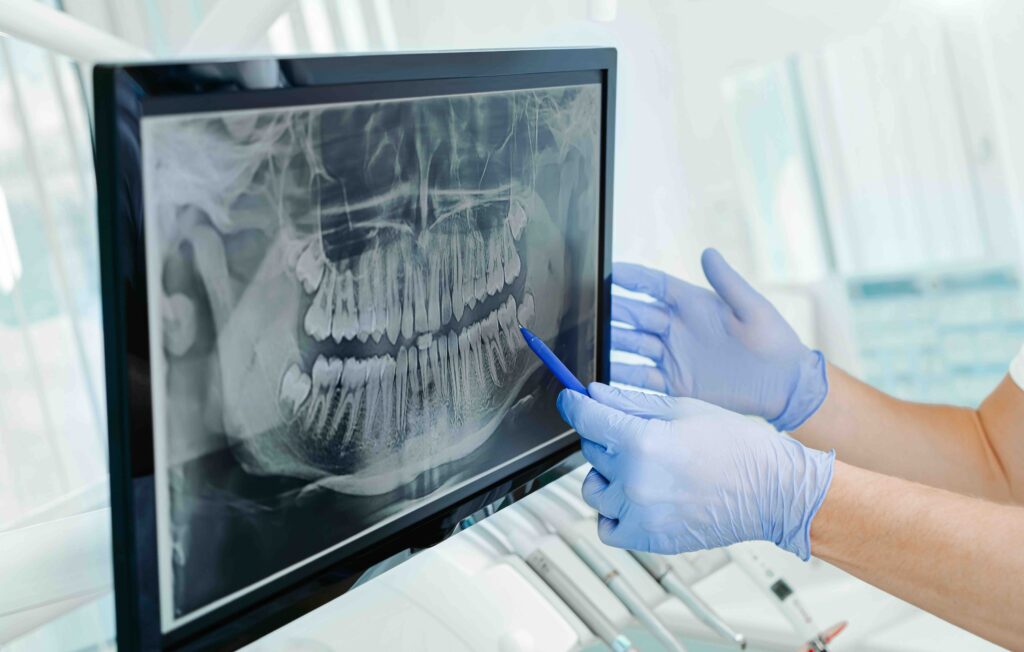
A typical visit includes a visual exam, gentle mobility testing, bite evaluation, and X-rays. If there is facial swelling, a cut lip, numbness, or concern for jaw injury, the exam may expand beyond the tooth itself. In some cases, especially after significant trauma, a cone beam scan gives a better picture of root fractures or socket damage than standard films.
Treatment often depends on the underlying cause, not just the amount of movement. A mildly loose tooth with a deep gum infection may be at higher risk than a moderately loose tooth that was cleanly displaced during a basketball collision. The biology is different.
How dentists stabilize a loose tooth
When trauma is the reason, the most common immediate treatment is repositioning and splinting. Repositioning means placing the tooth back into the best possible alignment. Splinting means attaching it to neighboring teeth with a flexible support so it can rest while the ligament and surrounding tissues heal. This is usually done with a thin wire or fiber material bonded to the teeth.
People are sometimes surprised that the splint is flexible rather than rigid. That is intentional. Teeth need a small amount of physiologic movement for proper healing. Overly rigid splinting can increase the risk of complications such as ankylosis, where the tooth fuses abnormally to bone.
The splinting period varies. It may be around two weeks for some injuries, longer if there is significant bone involvement or root fracture. Follow-up is not optional. The dentist needs to monitor how the tooth responds over time, because the nerve inside the tooth can lose vitality weeks or even months after the injury.
If infection is the issue, stabilization alone does not solve the problem. The source of infection must be treated, which might involve deep cleaning, drainage, antibiotics in selected cases, or root canal therapy if the pulp is infected. If severe periodontal breakdown is present, the conversation becomes more complex. Sometimes the tooth can be saved with periodontal treatment and splinting. Sometimes the support has been lost to a degree that makes long-term survival unrealistic.
Signs the nerve may have been injured
A tooth can look fine from the outside and still develop internal damage. The blood vessels and nerve tissue entering through the root tip are vulnerable during a blow to the mouth. When those tissues are compressed, torn, or contaminated, the tooth may later become non-vital.
That shift does not always happen right away. A patient may leave the emergency visit feeling relieved, only to notice weeks later that the tooth darkens, becomes sensitive to pressure, or begins to ache. Sometimes there is no pain at all, only a subtle gray or yellow color change. Regular follow-up lets the dentist compare tests over time and catch those changes before they turn into a more painful problem.
This is one reason emergency care and definitive care are not always the same appointment. Saving a loose tooth is often a process rather than a single event. The first goal is to protect the structure and supporting tissues. The second is to monitor healing. The third is to intervene if the pulp or bone fails to recover.
The difference between a loose tooth from trauma and one from gum disease
These two problems can look similar to a patient and behave very differently in treatment. A trauma-related loose tooth may have healthy surrounding support that has simply been injured. If aligned and stabilized promptly, it can recover surprisingly well. The supporting ligament has a real capacity to heal.
A gum disease-related loose tooth tells a different story. In that case, the problem is often gradual bone loss around the root. The tooth may not just be loose, it may be loose because the foundation has already been eroded over months or years. Bleeding gums, gum recession, bad breath, drifting teeth, and a history of delayed cleanings often appear in the background.
The treatment goals also diverge. With trauma, the focus is often immediate preservation. With periodontal disease, the focus is infection control, deep cleaning, bite management, and honest assessment of long-term support. Sometimes a patient wants the tooth “tightened,” but teeth do not tighten if the bone around them is gone. Splinting may improve comfort and function, but it cannot rebuild lost support by itself.
Pain control without making things worse
A loose tooth can hurt from the tooth itself, the ligament around it, the gum tissue, the bone, or all of the above. Cold compresses help with swelling during the first day. Over-the-counter pain medication is often appropriate if the patient can take it safely, but it should be used according to label directions or the advice of a clinician.
Many people assume antibiotics are the answer to any dental emergency. They are not. If the looseness comes from trauma without infection, antibiotics may not be needed at all. If the problem is an abscess or severe periodontal infection, antibiotics may play a supporting role, but drainage and local treatment still matter most. Antibiotics without source control often create a temporary lull rather than a real fix.
Soft foods make a difference during the first several days. Yogurt, eggs, oatmeal, soup that is warm rather than hot, smoothies eaten carefully, pasta, and soft fish are usually manageable. Biting into crusty bread, nuts, chips, apples, or steak too soon can undo careful stabilization. Patients who grind their teeth at night also need special caution, because parafunctional forces can challenge a healing tooth even when daytime eating is gentle.
Situations that change the treatment plan
Not every loose tooth can or should be saved. This is where professional judgment matters. Dentists look at root length, crack pattern, mobility grade, patient age, bone support, oral hygiene, bite forces, and medical history. A healthy front tooth loosened in a soccer collision is very different from a heavily restored molar with advanced bone loss in a patient who clenches hard every night.
A few variables often shape the outlook:
| Factor | Why it matters | | | | | Degree of mobility | Slight mobility may stabilize well, while severe displacement can signal deeper damage | | Root fracture | A fracture near the tip may heal better than one near the gumline | | Time to treatment | Earlier repositioning and splinting generally improve prognosis | | Gum and bone health | Healthy support gives the tooth a stronger chance of recovery | | Bite forces | Heavy clenching or a high bite can keep re-injuring the tooth |
The location of the tooth matters too. Front teeth are more often injured in falls and sports accidents. Molars may become loose from cracks, infection, or periodontal disease rather than direct impact. The restoration history also matters. A tooth with a large old filling or crown can have hidden structural weaknesses that are not obvious from the outside.
When extraction becomes the better option
This is the part many patients resist hearing, especially if the tooth is visible when they smile. But a good Emergency Dentist does not promise heroics when the biology is against it. If a vertical root fracture is present, if the surrounding bone is too compromised, or if the tooth has become a persistent source of infection with poor support, extraction may be the most predictable path.
That does not mean failure. It means avoiding weeks of pain, repeated emergency visits, and money spent trying to rescue a tooth with little realistic chance of lasting. In experienced hands, part of the emergency visit is knowing when to preserve and when to pivot.
If extraction is necessary, the conversation usually includes what comes next. Sometimes the site can be grafted for a future implant. Sometimes a bridge or removable option makes more sense. If the tooth is in the front, even short-term appearance solutions matter, because patients have jobs, events, and ordinary lives to get back to. Practical dentistry is not only about teeth, it is about function, confidence, and timing.
What recovery usually feels like
Even successful treatment does not make the area feel normal overnight. The ligament around a traumatized tooth can remain sore for days or weeks, much like a sprained ankle stays tender after it is supported. Biting may feel strange at first. The tooth may seem slightly different under the tongue because swelling, bonding material, or your own heightened awareness changes sensation.
Patients often ask how they will know if things are improving. Usually, the signs are subtle. Less tenderness with light contact. Less awareness when speaking. Reduced gum swelling. A bite that feels more even. What should raise concern is worsening pain, increasing looseness, swelling, fever, a pimple on the gum, foul taste, or a darkening tooth. Those changes deserve re-evaluation promptly, even if you already had initial treatment.
Follow-up timing varies, but many cases are rechecked within a couple of weeks, then again later to assess vitality and healing. It is not unusual for traumatic injuries to be monitored for several months.
A common real-life pattern dentists see
One scenario comes up repeatedly. Someone chips a front tooth and loosens it during a weekend game or a night out. There is some blood, a little swelling, and a strong desire to wait because the tooth is “still attached.” By Monday, the bite feels off, the lip is more swollen, and the tooth has started to drift. At that point, the office visit becomes more involved than it might have been the day of the injury. What could have been a straightforward repositioning and splint may now include greater inflammation, clot formation in the wrong position, or additional occlusal adjustments.
Another common pattern involves people who already had mild periodontal disease and then bite something hard. They think the food caused the entire problem, but really the event exposed an existing weakness. Those are the cases where emergency care is just the beginning. The tooth may need immediate stabilization, but long-term success depends on periodontal therapy and daily plaque control. There is no durable shortcut around that.
Choosing the right kind of urgent care
Not every urgent care clinic is equipped to manage dental trauma properly. If a tooth is loose but still present, a dental office that handles same-day emergencies is usually the best first call. Medical urgent care may help with pain medication, swelling, or referral, but they typically cannot splint the tooth or fully assess dental structures. Hospital emergency departments are essential for severe facial trauma, uncontrolled bleeding, difficulty breathing, loss of consciousness, or suspected jaw fracture, but for an isolated loose tooth, direct dental treatment is usually what you need most.
When you call, be ready to describe what happened, when it happened, whether the tooth changed position, whether you can close your teeth together normally, and whether there is swelling, bleeding, or numbness. Those details help the team judge urgency and prepare the right materials before you arrive.
The bottom line for a tooth that is loose but not gone
A tooth does not have to be lying in your hand to qualify as a Emergency Dentist true dental emergency. In many adult patients, a loose tooth is a narrow window problem. Fast, calm action improves the odds. Leave the tooth alone, protect it from pressure, and get seen by an Emergency Dentist as soon as possible.
The best outcomes usually come from a combination of speed and restraint. Speed, because injured tissues need prompt evaluation. Restraint, because unnecessary wiggling, eating, or home tinkering can turn a manageable injury into a much harder case. When the tooth is still in the mouth, there is still something to save. That is exactly when emergency dental care matters most.